
I’d heard whispers that British Columbia was the jewel of Canada, but it’s a vast province with massive mountain ranges and tremendous distances. However, two destinations perfectly capture the breadth of its beauty and wildlife. One is the alpine village of Whistler, where the mountain slopes provide a playground for hiking and biking in the summer and a skier’s paradise all winter long. The other is Tofino on Vancouver Island, where rainforests yield to emerald bays and long beaches with silky, soft sand.
I am fortunate to visit both on one epic journey.
Whistler's Nurturing Nature
We start our journey in Whistler, a magical, 90-minute drive from Vancouver on the Sea-to-Sky highway. There’s no sleeping through this drive, with the jagged rock of the mountains on one side and on the other, steep slopes plummeting to the open ocean. As we climb that highway into the mountains, we feel our cares slipping away, our minds energized by the sight of gushing waterfalls, verdant forests, distant islands, and the utterly wild splendor of this pristine landscape. While there’s no bad time to come to this mountain village, spring and summer are special times to retreat, rejuvenate, and soak up Whistler’s nourishing beauty.
We quickly discover that Whistler is an adventure-lover’s oasis, with a plethora of summertime activities designed to get our pulses racing. We ponder our many options from ziplining over the forest floor at high speed and conquering high rope obstacle courses, to whitewater rafting trips on the glacial rivers. We choose a more sedate, off-road buggy drive, careening along the mountain trails and culminating in a guided hike. Inhaling the fresh scent of pine, we learn about the bears and birds of Whistler as we make our way through one of the many paths that snake through the mountains.

That afternoon, we board the Whistler-to-Blackcomb Mountain Peak 2 Peak Gondola and are transported between the two mountains in one of the cabins with a glass floor. We look down on a mass of forest hundreds of feet below us, with the rivers and waterfalls that snake through the mountain ranges looking like nothing more than trickles from the sky. At the Blackcomb peak, we stop for a meal at Christine’s, a fine-dining restaurant whose light, fresh fare highlights the bounty of British Columbia’s fertile soil and seafood.
It’s a sobering experience to learn about the meaning of the land to the First Nations, who have lived here from the beginning. To hear their story, we head to the Squamish Lil’wat Cultural Centre, a living museum that showcases the lives and history of the Squamish an Lil’wat people. While these First Nations lay claim to different territories, they share Whistler. To this day, they honor their ancestral alliance, living side by side and revitalizing their culture and traditions. We take a guided tour through the center with a young Squamish woman who explains how her nation created its art, made clothing, and harvested food. We also learn of the hardships and suffering of First Nations in Canada, and the many injustices they have experienced. We leave feeling deep respect for the wisdom of their ancient ways and their determination to survive against all odds.
Before evening sets in, I sit in a deep eucalyptus-scented mist, the sound of dripping water the only thing audible. At the Scandinave Spa, guests’ only task is to immerse themselves in heat, plunge into the cold, and then rest peacefully. The rules are strict: no chatting, buzzing phones, or smart watches pinging on your wrist—in fact, no electronic devices whatsoever. Staff wear shirts emblazoned with the word “Silence,” and everyone who passes through the entrance adheres to one central rule: keep the peace intact. There’s a haze of relaxation as visitors move between hot tubs, cold plunge pools, wet saunas, dry saunas, and solariums overlooking forests of spruce and cedar, their branches laden with lime-green lichen. With no time limit, I take as long as I like to rest, recuperate, and use that serene stillness to soothe my tired mind.
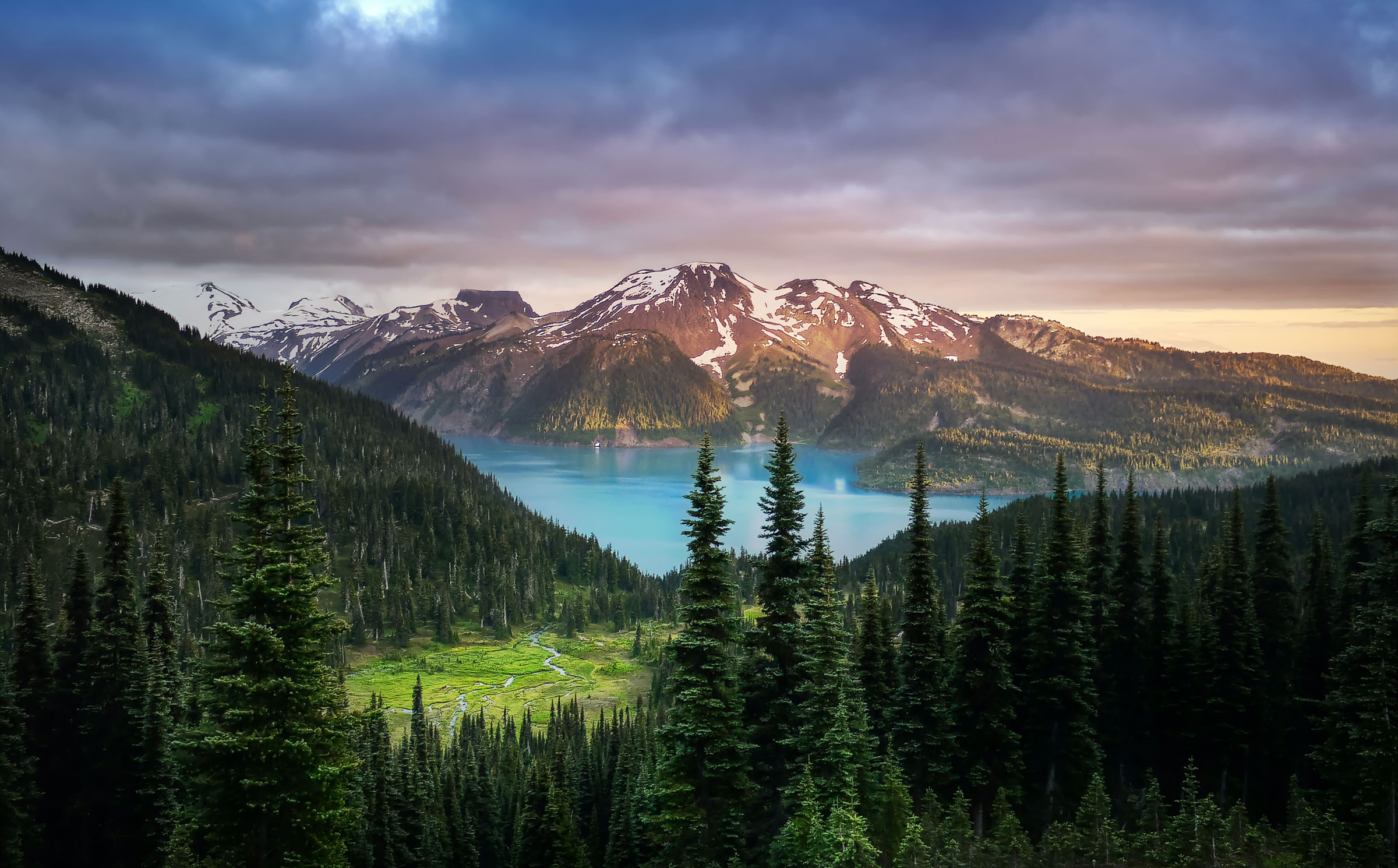
Finally, we check into the Four Seasons Resort Whistler, Whistler’s only five-star hotel, and a classy venue located steps from the Blackcomb Mountain ski lifts. The hotel exudes warmth, friendliness, and understated luxury. Still, it also comes with an assortment of unexpected guest amenities, including afternoon cookies and hot chocolate, complimentary guided hikes, and tickets to the Squamish Lil’wat Cultural Centre. We end the day with a swim and a few minutes of bone-warming heat in the dry sauna. Then we slip beneath the sheets for a night of deep, comfortable rest, inspired by Whistler's ability to both nurture and exhilarate.
Vancouver Island’s Wild Beauty
After a few nights in Whistler, we journey back down the mountain, stopping in Squamish for a flightseeing tour. Our four-seater plane climbs from the valley into the Tantalus Mountain range, leaving the winding path of the Squamish River far below. Some 500 feet into the air, we see a version of Squamish few ever get to explore. It’s a region with remote, almost-impossible-to-reach alpine lakes, jagged peaks still covered in glacial ice, and waterfalls that tumble down the mountains, emptying into the Sound. The plane circles the mountains before heading back towards the Howe Sound biosphere, which stretches south towards the Gulf Islands and Vancouver Island in the distance. We look out over the expanse of ocean, hoping to glimpse orcas, which have been spotted here before. En route back to the airport, the rock walls of the Squamish Chief reflect in the sunlight, and the thundering waterfalls of Shannon Falls plunge down the mountainside.
Our commute continues to West Vancouver, where we board a ferry to Nanaimo on Vancouver Island. We then drive three hours to Tofino for the next leg of our journey, leaving the mountains for the beaches. We check in at the legendary Wickaninnish Inn, a boutique, family-owned 75-room inn overlooking the crashing sea waves. Fondly known as the “Wick,” it attracts guests for storm-watching in the winter, while spring through fall promise long walks on Chesterman Beach, Zodiac trips to look for bears, and hikes through the verdant, lush rainforests. We love the inn’s quintessentially Northwest architecture, design, and décor, and its gallery-like walls filled with exquisite art that reflects the wildlife and forests surrounding it.
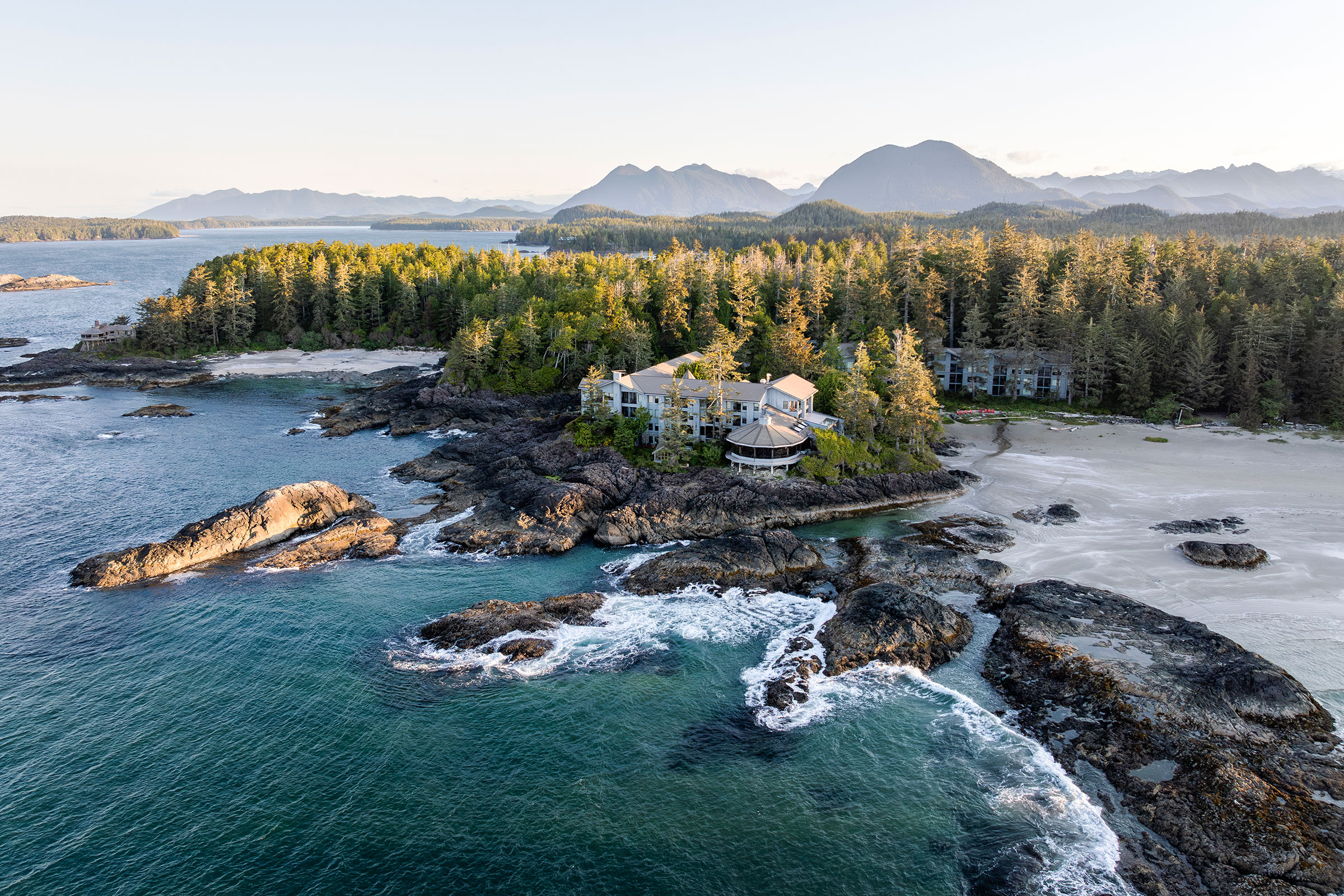
The next day, we pad the few steps from our room to Chesterman Beach to meet our local foraging guide. Over the next twohours, she guides us through some of the edible delicacies of the intertidal zone and adjacent rainforest. We feel the contours of the purple Turkish towel, a seaweed that’s great forskin exfoliation in the bathtub, and touch the soft greens of sea lettuce, a species easily plucked off the rocks and eaten raw or added to soups, salads, or pastas.
“The First Nations have a saying, ‘when the tide is out, the table is set,’ and it’s so true, because that’s when everything is at its freshest,” she says as we gaze inside the tidal pools with new appreciation of their culinary offerings.
By the time we wrap up, we have a new perspective on the smorgasbord of nutrient-rich, healthy ingredients that can be easily foraged under the right conditions.
Next, we hop on cruiser bikes and take a jaunt into town, an easy three-mile ride. We spend a fun few hours exploring Tofino’s retailers, rubbing shoulders with locals as we browse at Mermaid’s Tales for books and visit coffee shops, boutiques, and galleries.
The Tofino Clayoquot Heritage Museum, a modest, one-room museum, offers a sobering glimpse of the town’s history, before and after white settlers arrived. While there are stories of brave pioneers who endured great challenges in the early days, there is also information on the area’s two residential schools, which, as recently as 50 years ago, were still wrenching children from their families, changing the trajectory of First Nations’ lives for generations.

Later, we head to the Tofino dock to board a boat for Moon Jelly, unquestionably the most distinctive hot-cold plunge in the Pacific Northwest.
The adventure begins the moment we board the boat, embarking on a ride that weaves between forested islets and passes remote, off-the-grid homes perched on the cusp of forested, steep rocky cliffs. At an oyster farm, seals sunbathe lazily on barrels beneath which the oysters grow. The water is an exquisite emerald, and in the background, BC’s iconic snowcapped mountains look straight out of a postcard.
Our floating hot-cold plunge experience, in the middle of a cove in Lemmens Inlet, is equipped with two hot baths, a shower and change room, lounging furniture, composting toilets, and hot tea. There are paddleboards for exploring the cove, books on seaweed, a gas fireplace to reduce any chill in the air, and blissful silence but for birdsong and the breeze.
"Just last week we saw a wolf in the cove,” says Kaeli Robinsong, who built Moon Jelly with her partner, Mike Mavis.

The tubs, heated by wood, are filled with fresh salt water and sustainably harvested seaweed for each visit. Cautiously at first, we immerse ourselves in the hot seaweed bath, feeling our skin caressed by silky fronds of bull kelp and macro kelp rich in antioxidants and healing minerals. When we need a respite from the heat, we simply descend the ladder into the emerald water surrounding the protected cove. Then we dry off in the sunshine on the float house’s sofas and hammock.
Over the course of four unforgettable hours, we repeat this formula of hot, cold, rest, and relaxation, listening to birdsong and watching the sunshine glisten on the water. We head back to Tofino feeling invigorated and refreshed, filled with wonder at the pristine beauty of Vancouver Island.

Canada
Luxury travel to Canada promises unlimited adventure. Indeed, Canada is a vast natural playground of tundra and traditions. It is also highlighted by progressive cities that stay on the cutting edge of global arts and culture.
Discover Canada
Quest Magazine
Dedicated to the experiential style of Ker & Downey travel, QUEST Magazine features eye-opening content that focuses on unforgettable experience, unheard-of destinations, and the very best our world has to offer. Each issue is packed with insider information, what's new in the world of travel, and editorial pieces that focus on our global culture, philanthropy, and transformative travel.
Read The Spring 2026 IssueSee What We Are Up To
Subscribe to our Weekly Newsletter for Travel Tips and Insider Guides for Planning your Next Journey!