
Written by Rina Chandarana
Whenever Morocco is mentioned, the mind drifts to rippling Saharan dunes and the labyrinthine souks of Marrakesh. But beyond these familiar images lies a country shaped by more than a thousand miles of coastline, varied landscapes, and towns that beckon travelers to discover a different side of the kingdom.
Sufi Sounds
Morocco’s sounds are music to my ears. Its cities, beaches, and deserts each carry their own melodies. In Rabat, the happy noise of children and families playing along the sand blends with the steady rhythm of Atlantic waves crashing onto the shore. Above it all, a bright red Moroccan flag atop the Kasbah of the Oudayas flaps in the sea breeze.
Around a sharp bend in a maze-like lane, where a towering arched door studded with brass comes into view, a musician strums an oud, its warm notes echoing softly off the walls.

Near the Royal Palace, at the main gate of the medieval Chellah, flanked by two engraved octagonal towers, a man spins at a pace that would send me into a bout of vertigo. His red kaftan billows as he turns, the long tassel of his arbouch, adorned with cowrie shells, striking his round drum in a steady, meditative beat. The music is Gnawa, our guide, Seddik, explains, a spiritual tradition rooted in Morocco’s Sufi heritage.
Enclosed within walls built in 1339, Chellah reveals itself as an archaeological sanctuary: paved streets, baths, and temple ruins scattered across the site. I pass the torso of a marble statue, a reminder that this was once a thriving Roman and later Phoenician commercial hub, trading across the Mediterranean and North Africa. Massive storks, unbothered by the layers of history beneath their feet, perch atop an ancient minaret. Olive trees and date palms offer shade near mausoleums and Sufi shrines, making the site feel like a true oasis of calm.
At the Mausoleum of Mohammed V, which houses King Mohammed V and his sons, King Hassan II and Prince Abdullah, families gather for photographs against a brilliant display of blue-and-red geometric patterns. Guards in green caps and white gloves stand perfectly still—brief moments of composure within a swirl of color, movement, and joyful sound.
Mountain Moments
On a bright, sunlit day, I visit an Amazigh, or Berber, village tucked into a dry valley of the Atlas Mountains. Little girls greet me at the school’s doorway with shy giggles, their arms outstretched to show off henna designs from recent Eid celebrations. Inside, their mothers trace Arabic words in lesson books at a school built by the Travel Link Foundation to support women’s education.
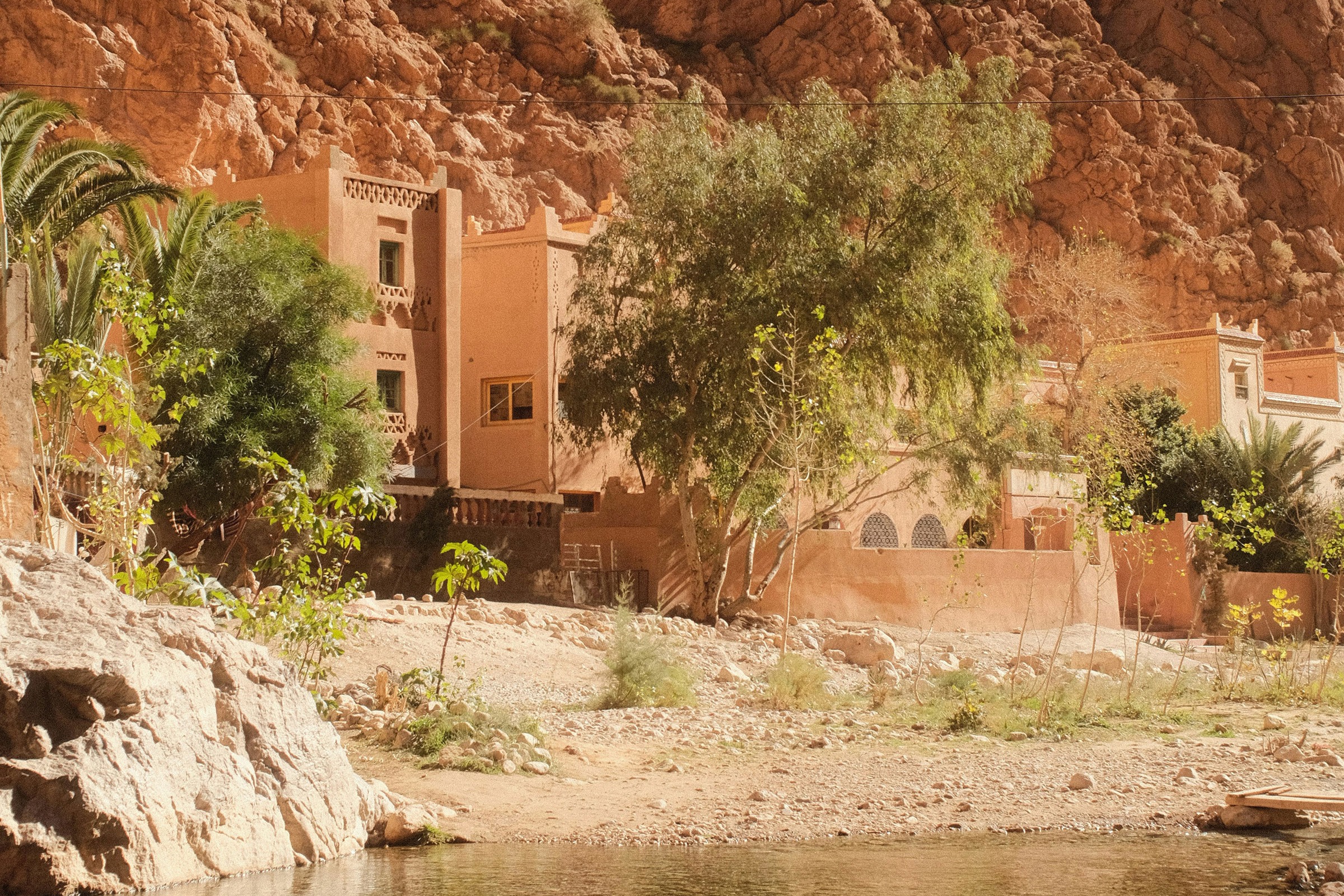
Nearly 950 villages dot the Atlas Mountains, and at this school alone, 20 women attend classes or weave baskets from dwarf palm in the adjacent building. Founded by Mr. Ahmed Nait, Travel Link has established 16 such centers, an effort to give back to his Amazigh community.
I climb a dusty hill past a donkey and a tiny barbershop to share a tagine lunch with a family in their 300-year-old ancestral home outfitted with wooden doors painted bright blue and red. Inside, a sunlit inner courtyard overflows with holy basil and ripening tomatoes. Steaming mint tea is poured into my glass, its fragrance rising with the heat. As we drink, I learn of an engagement tradition: when a man asks for a woman’s hand in marriage, her father’s answer is given through tea. If he pours from high above, the union is approved; if poured closer to the glass, it is not. In Morocco, a rising stream of tea means far more than a warm welcome.
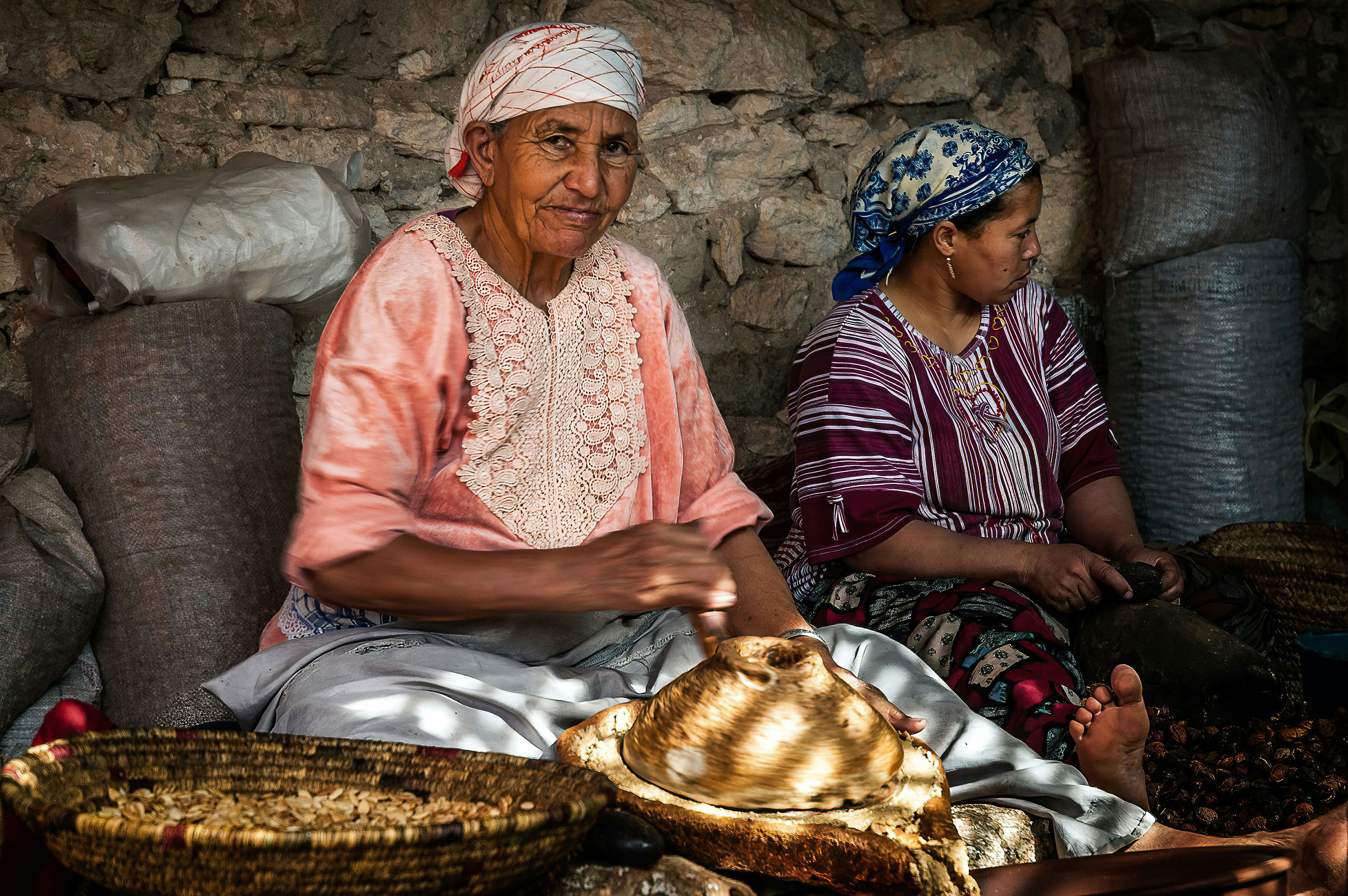
The mother explains the tagine process in Amazigh. Her sun-worn skin and hardworking hands, which have prepared countless meals, remind me of my own grandmothers, with their kind eyes and lives shaped by experiences so different from my own. As she kneads the dough, sheep bleat in a small enclosure within the family home, and birdsong drifts through the air.
Coastal Tales
The Atlantic meets land in Essaouira, where massive waves crash in loud, frothy abundance against the Moroccan coast.
Once a hub for gold that passed through Timbuktu, along with salt, swords, and enslaved people from sub-Saharan Africa, Essaouira feels like a whitewashed Greek town infused with the pulse of Gnawa music. Played with drums and iron castanets, the sound is spiritual, linking musicians to ancestors from across the continent. Rooted in Sufi tradition, the music blends Arabic, Amazigh, and West African influences.

Though I don’t understand the lyrics, I am mesmerized. Gnawa music feels inseparable from Morocco’s identity. “There is unity in our diversity,” our guide Seddik says. We walk through clean, whitewashed lanes, where walls are pierced with bright blue, curved doorways, to an old synagogue that quietly bears witness to Essaouira’s once-thriving Jewish community. Inside, sunlight filters through tall windows, illuminating wooden benches and hanging light fixtures.
Outside, cats lazily nap atop colorful textiles, unfazed by visitors. Atop an expansive rooftop patio, I pause to take in the city stretching toward the ocean, the Jumuah Friday prayers echoing across the sky, calling the faithful to pause for a moment of worship.
Desert Dreams
One clear evening, we drive past Marrakesh into the rolling hills to reach the Agafay Desert and the Inara Camp. Though not as famed as the Sahara, this desert has a quiet, compelling beauty of its own.
At the camp, with just 19 tents, guests enjoy Atlas Mountain treks, horseback rides, meditation, and visits to local Berber families. Vincent Jaquet, a Frenchman enchanted by Morocco during a visit, decided to open Inara here. “This is a place to disconnect from the world and reconnect with yourself,” he tells me.
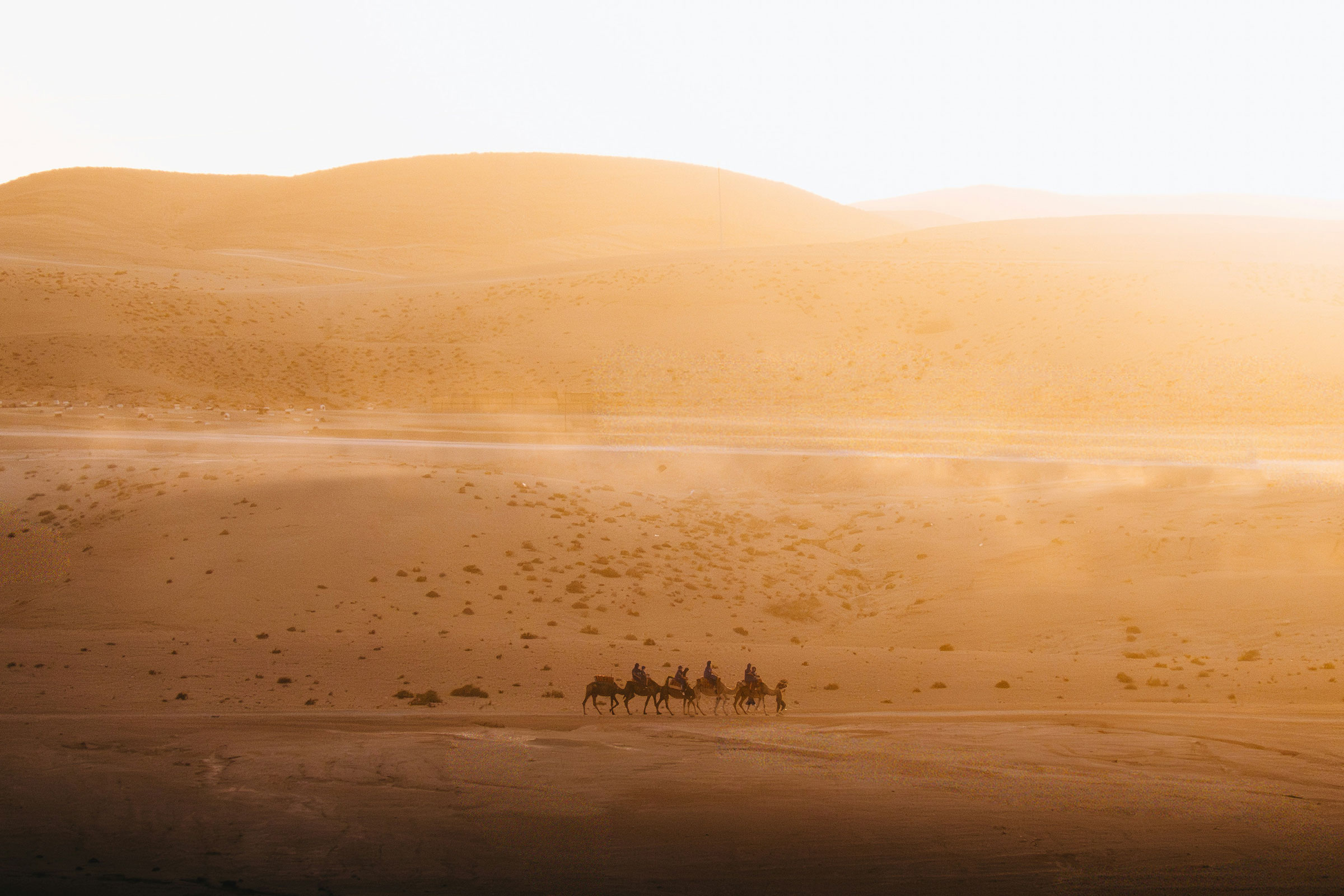
Just one night here, and I understand why. My hand is adorned with henna as the sky shifts from dusky pinks to inky darkness, pierced by the brilliance of countless stars. Vincent explains that the night sky is especially spectacular from December to February. The name Inara, meaning “beautiful light” in Arabic, feels perfectly fitting.
Inside my cozy tent illuminated by candles, a tagine dinner is served as three men sing Andalusian songs accompanied by a tambourine, hand drum, and oud. Even without understanding the lyrics, I am captivated by the poetic sound—a reminder that Morocco’s cultural influence once stretched across southern Spain and Portugal.
No matter where I go in Morocco, I am met with cheerful smiles and greetings: “as-salaam alaykum,” the Arabic phrase meaning “peace be upon you”; “marhaba,” meaning “welcome”; or the French “bonjour,” meaning “hello.” As a French speaker, I immediately feel at home. Yet even beyond language, Morocco radiates a genuine warmth that makes every visitor feel welcome.

No matter where I go in Morocco, I am met with cheerful smiles and greetings: “as-salaam alaykum,” the Arabic phrase meaning “peace be upon you”; “marhaba,” meaning “welcome”; or the French “bonjour,” meaning “hello.” As a French speaker, I immediately feel at home. Yet even beyond language, Morocco radiates a genuine warmth that makes every visitor feel welcome.
In Morocco, the country’s sounds and languages ring out with layers of history, culture, and a deep sense of connection—an experience that allows me to feel less like a passive tourist and more like part of its symphony of sound.

Morocco
Journey to the Western Kingdom. A land where you can gaze upon never-ending ripples of red sand while atop the back of a camel. A land where you can inhale the fresh scents of cinnamon, cumin and ginger. A land where ancient and modern cultures interlace to form the fascinating Islamic architecture of North Africa.
Discover Morocco
Quest Magazine
Dedicated to the experiential style of Ker & Downey travel, QUEST Magazine features eye-opening content that focuses on unforgettable experience, unheard-of destinations, and the very best our world has to offer. Each issue is packed with insider information, what's new in the world of travel, and editorial pieces that focus on our global culture, philanthropy, and transformative travel.
Read The Spring 2026 Issue
Talk to A Travel Designer
Get advice and suggestions to make this your perfect trip.
Or give us a call at 800.423.4236.
Inquire NowSee What We Are Up To
Subscribe to our Weekly Newsletter for Travel Tips and Insider Guides for Planning your Next Journey!