Buenos Aires Up Close
A journey through craft, food, tango, and the art of paying attention.

Written by Haley Beham
My husband and I came to Buenos Aires for the simplest reason: a few days away together in one of the world’s great cities.
After an overnight flight from Houston, we hit the ground running in Buenos Aires. It is early spring, and the city is waking up alongside us. The jacaranda trees are on the verge of blooming, and a light breeze flows through the street beneath a cloudless blue sky.
From the start, Buenos Aires feels lived-in and comfortable. It’s the kind of city where life carries on, whether you’re there to witness it or not. The grand facades and sidewalk cafés lean European, but the city’s warmth, late nights, and easy rhythm make it unmistakably Argentine.
Connection Through Craft
Our private guide meets us for a walking tour that begins in San Telmo, one of the city's oldest neighborhoods. Cobbled streets and iron balconies lead us to a small shop where the daughter of Juan Carlos Pallarols, a world-renowned Argentine silversmith, greets us. Inside the display cases are pieces that hint at the country’s deep connection to craft and tradition: ornate silver gaucho stirrups, delicate silver roses, objects that feel both functional and reverent.
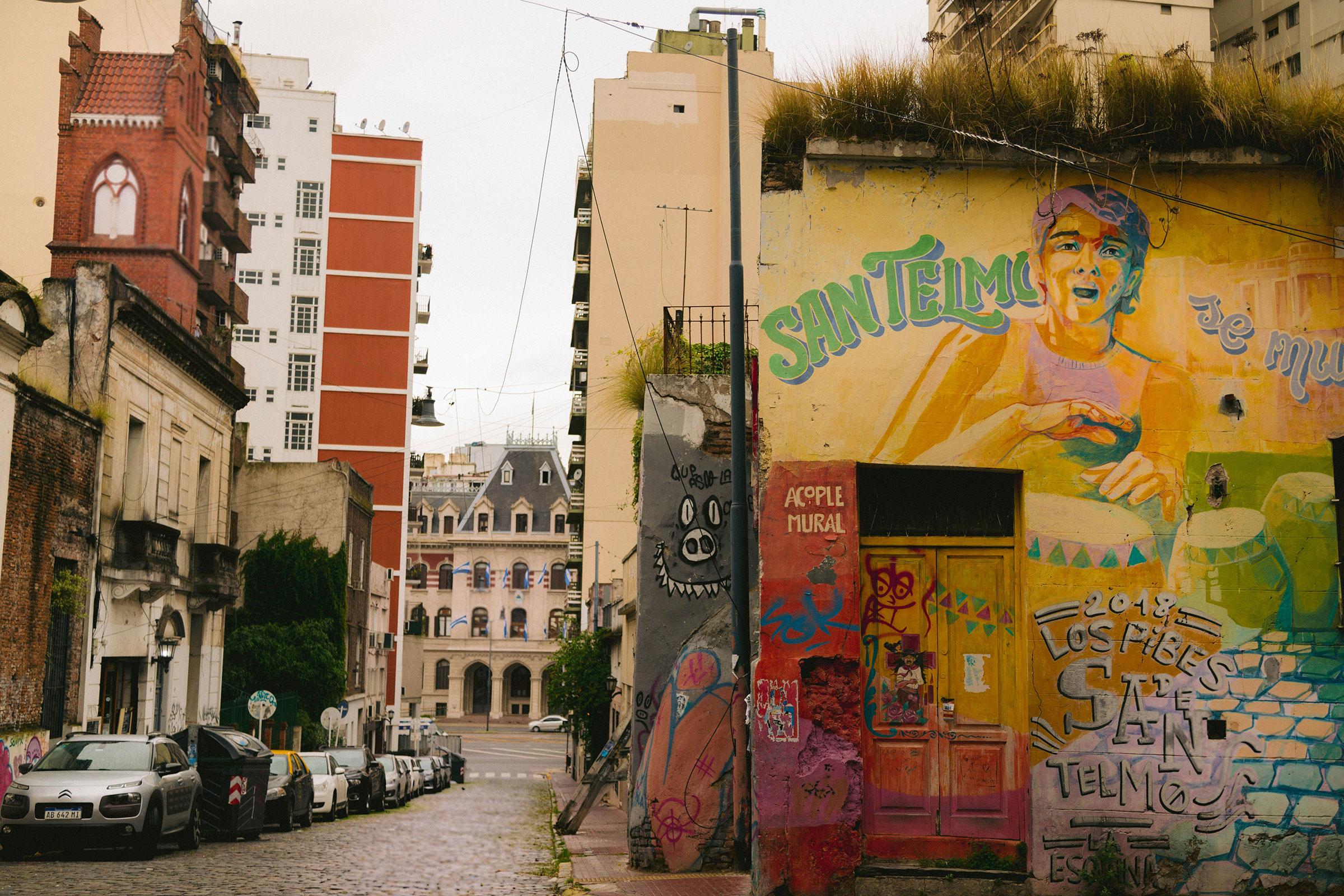
Argentina has a long tradition of silversmithing tied to gaucho culture, with intricate maté cups, knives, and horse gear serving as both practical tools and artistic expression. Pallarols stands within that lineage, elevating traditional forms into nationally significant works.
Down the street, we are buzzed into Juan Carlos’ personal family home and studio, where generations of his family have lived and worked. The house feels less like a residence and more like a living museum. Walls and shelves brim with his personal art collection and pieces of his own work, woven seamlessly into daily life. Across from his office sits a table covered in commissioned works: a custom silver book cover made to protect a deeply personal keepsake, and a six-foot silver snake stretched across the surface. Its segmented body is bent and curved with an almost life-like fluidity. This particular piece, once commissioned and sold, has eventually made its way back to Juan Carlos’ personal collection. I find myself wondering how he had ever parted with it in the first place.

Inside Juan Carlos’ studio, chisels and hammers hang on the walls, many of them used by his father and grandfather before him. He works at a desk positioned by a window overlooking the street below, an open torch flame burning nearby. At the time of our visit, he is finishing a silver rose, a motif for which he is known. He recently completed another rose for the band Guns N’ Roses, who are arriving in Buenos Aires to pick it up themselves just days after our visit. The interior of that piece incorporates bullet casings, wrapped in silver petals.
Juan Carlos is a sixth-generation silversmith. His work includes a chalice commissioned for the Pope and the ceremonial batons used in Argentine presidential inaugurations. Standing face-to-face with him in his studio, talking about his life and work, feels quietly profound and intimate. This is not a presentation but a conversation. We leave without anything to show for the experience, only the memory of it. That sense of intimacy stays with me as we continue through San Telmo. Once home to Buenos Aires’ wealthiest families, the neighborhood sits just south of the city center.
Connection Through Food
Buenos Aires built its early wealth through the silver trade, transporting precious metals down the Río de la Plata, which translates to “River of Silver,” from the Andes. Over time, cattle ranching and agriculture became equally important, earning Argentina its reputation as one of the world’s great suppliers of grain and beef.

Nowhere is that felt more than around a table. One night, we gather around a communal table for a 16-course tasting menu shared with just a handful of other diners. The experience showcases Argentina’s culinary confidence: exceptional beef, five thoughtfully paired wines, and desserts such as alfajores, a traditional Argentine cookie, that reflects both European influence and local tradition. It is engaging and hands-on, the kind of meal where conversation unfolds as naturally as the courses themselves. Food here isn’t presented as spectacle, but as a form of storytelling, where each dish expresses the country’s flavors, traditions, and the culinary legacy passed down through generations. Each course is meant to be lingered over, discussed, and shared.
That same spirit of connection shows up in smaller, everyday rituals as well. During one of our experiences, we learn about maté, a hot, caffeinated tea, and its cultural significance in Argentina. Maté is made from dried yerba maté leaves that are steeped in hot water and then sipped through a metal straw called a bombilla. Maté is far more than a drink. It’s a social ritual woven into daily life. It’s shared in parks, on street corners, and in living rooms across the country, passed hand-to-hand as conversation unfolds. Throughout Buenos Aires, we see people walking with thermoses tucked under their arms, always ready to pour another round.
Maté isn’t rushed. It’s about slowing down, lingering, and connecting. This everyday tradition has endured for centuries.
Connection Through Tango
By the late 19th century, waves of immigrants arrived from across Europe and beyond. San Telmo’s long, narrow casa chorizo houses (homes built on narrow lots with rooms arranged in a straight line, typically opening onto a central patio) were subdivided to accommodate multiple families. Overcrowding led to outbreaks of cholera and yellow fever, prompting much of the city’s elite to move north. Those southern neighborhoods, including nearby La Boca, became home to newly arrived immigrants who shared little in common except for a collective hope for a new life.
It was here, in this melting pot of cultures, that tango was born.
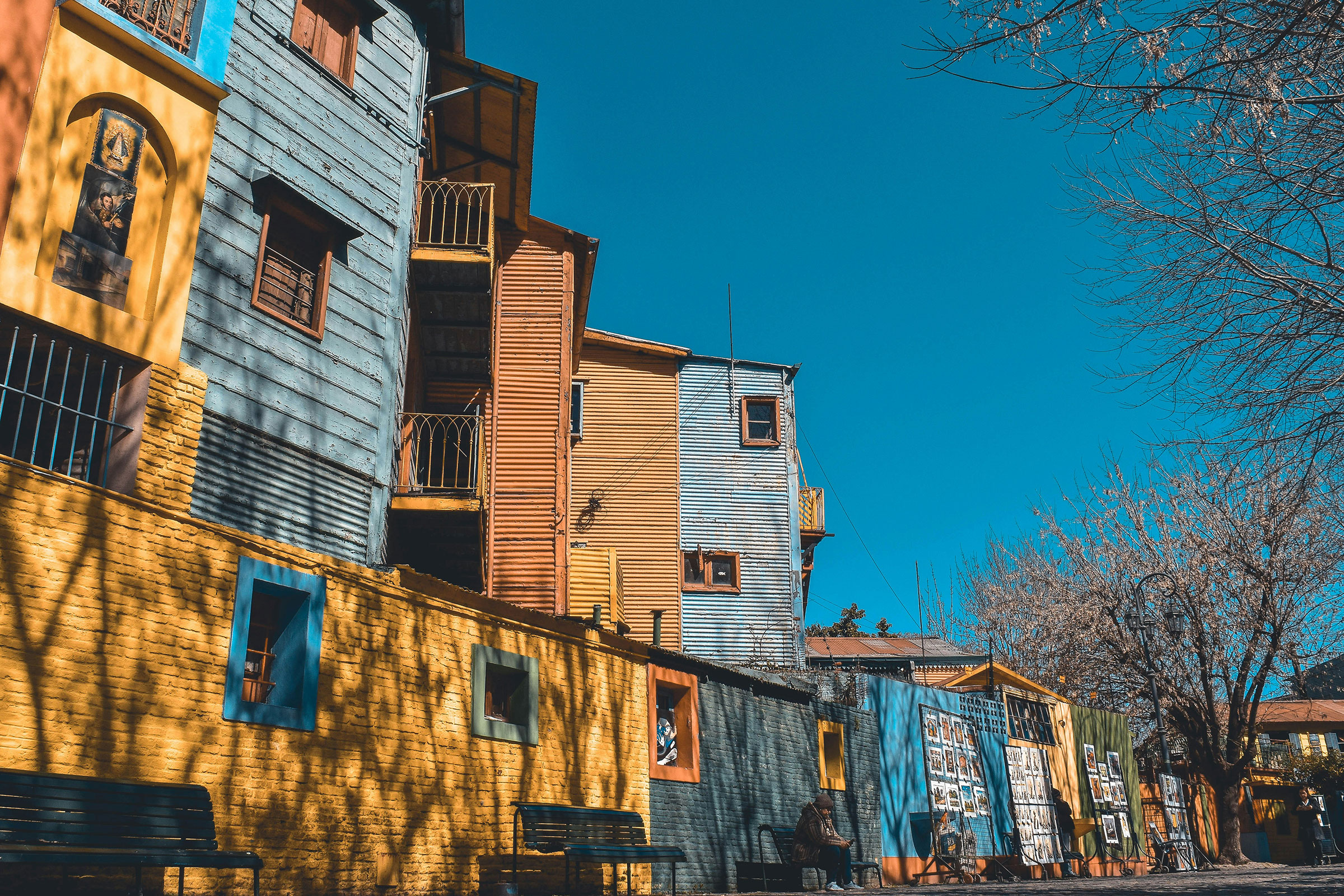
Argentines often say that tango came before the music. The dance emerged first as a means of communication without words. In neighborhoods like La Boca, young people from different countries and backgrounds found expression through movement. Tango became a shared language, rooted in proximity, improvisation, and trust. Artists and musicians gravitated to La Boca as well, further shaping its creative identity. Even today, the neighborhood retains that energy, from its brightly painted buildings to the legendary Boca Juniors stadium, whose iconic blue and yellow colors are said to have been chosen based on the next ship to arrive in port—a Swedish vessel.

Experiencing tango firsthand brings that history into focus. We begin with a private lesson in a small studio with Natalia and Pedro. At first, it is uncomfortable. Tango requires closeness, awareness, and vulnerability. Natalia explains that tango is about communication, not through words, but through the body. You make mistakes and continue. You don’t judge the misstep; you simply move to the next beat. It feels like an analogy for life delivered through movement
That evening, Natalia and Pedro take us to a milonga, a traditional social tango gathering. From the outside, it is unremarkable — just a nondescript door on a quiet street. I wouldn’t have noticed it had Natalia and Pedro not been with us. Inside and up the stairs, the room opens onto a dance floor surrounded by chairs and tables. Pedro tells us that there are unspoken rules governing everything at a milonga: where single women sit, where couples gather, how partners are chosen. Men seek eye contact across the room rather than approaching directly, preserving dignity and discretion should they be turned down. Once paired, partners dance a tanda—a set of three or four songs—before returning to their seats.
There are basic steps in tango, but the artistry lies in improvisation. The man leads with confidence, navigating not only his partner but the movement of other dancers around them. The woman follows with intention and trust, maintaining a firm frame without collapsing into the embrace. Tango is less like a performance and more like a conversation unfolding in real time. We observe a few songs, and then at the urging of my husband and Natalia, I join Pedro on the dance floor. I am nervous and excited. It is scary to be among these incredibly talented locals moving effortlessly around the room, yet thrilling too.
Connection Through History and Traditions
Two hours outside Buenos Aires, the landscape opens into the Pampas, where Estancia La Bamba de Areco is nestled amid rolling fields. The Relais & Châteaux property dates back to 1830 and is one of the oldest colonial-style estancias in Argentina. Once a post house along the Camino Real linking Buenos Aires to the north of the country, La Bamba is deeply rooted in gaucho history and tradition.

We spend the day exploring the property on horseback, moving at an unhurried pace that feels in sync with the land itself. Lunch is an Argentine asado, a traditional barbecue served family-style around a communal table. Platters keep arriving with three different cuts of meat, vegetables prepared simply and beautifully, and dessert. We swap stories with fellow travelers and soak in our surroundings.

Later, seated beneath the shade of large trees, we watch the estancia’s horse whisperer work with one of the horses. Without force or haste, he guides the animal gently, leading it in a slow, deliberate circle before bringing it calmly down to the ground. At one point, he lies across the horse, arms outstretched, the animal completely at ease. It is a stunning display of trust and connection between the gaucho and horse.
Returning to the city, the contrast between neighborhoods is striking. In the north, Recoleta and Palermo are more formal and grander than San Telmo and La Boca. After leaving San Telmo, many of the city’s wealthiest families built Parisian-style homes among parks, embassies, and private clubs, shaping a side of Buenos Aires that still carries a distinctly European influence.
Recoleta is also home to the city’s famous cemetery, a place that feels less like a burial ground and more like a marble city of its own. Its elaborate mausoleums speak to legacy, class, and the stories Argentina holds close—none more enduring than Eva Perón, the former first lady of Argentina, also known as Evita, whose myth still lingers in the national imagination.
But Argentina is not defined by a single story. It is defined by a convergence of cultures, histories, crafts, and voices. It is a place where silver is not just metal but memory, where dance becomes language, and where identity is expressed through both pride and resilience.
What stays with me most are not the grand landmarks or iconic moments, but the experiences that have room to unfold in conversations, in shared meals, and in quiet exchanges. Buenos Aires rewards travelers willing to pay attention, offering a depth that lingers long after you leave.
PRO TIP | Don’t skip the guide. It’s tempting to explore a big city on your own, but Buenos Aires is far more rewarding with someone who can help you understand the layers, history, and nuance that make it such an enduring place.– Haley Beham, Lead Content Strategist

Haley Marek Beham
Haley is a travel writer and content creator for Ker & Downey. She fell in love with travel at the age of nine when she traveled on safari with her family to Botswana. Since that first overseas trip, she's explored Northern and Southern Africa, Southeast Asia, Europe, and South America with her camera, telling stories along the way to inspire others to discover the world through travel.
Inquire Now
Talk to A Travel Designer
Get advice and suggestions to make this your perfect trip.
Or give us a call at 800.423.4236.
Inquire NowSee What We Are Up To
Subscribe to our Weekly Newsletter for Travel Tips and Insider Guides for Planning your Next Journey!